
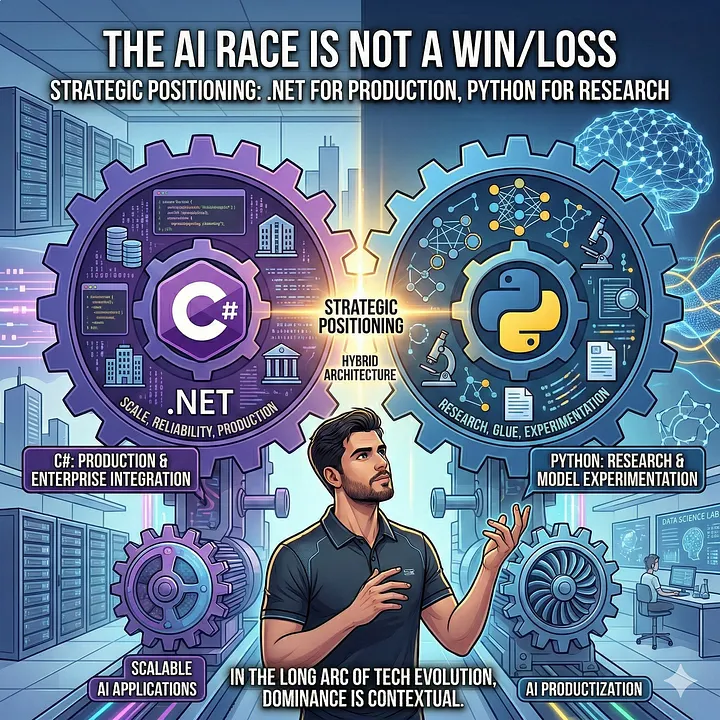
For more than four years, I’ve been building software within the .NET ecosystem. To me, .NET is not just a framework it’s a structured habitat. It shaped how I think about architecture, maintainability, and long-term scalability. Strong typing, clear boundaries, SOLID principles, layered structures… this environment trained my engineering instincts.
But one of the most important rules in technology and in science is simple: Never become resistant to change.
Over the past year, I deliberately stepped outside my comfort zone. I started investing in TypeScript. And inevitably, that meant meeting Node.js.
This is not a story about abandoning .NET. It’s about expanding perspective.
From Structured Discipline to Velocity Culture
Coming from C#, the transition felt like a cultural shift. C# optimizes for structure. JavaScript optimizes for flexibility.
In .NET, the compiler acts as a strict mentor. It catches mistakes early. It enforces discipline. Architecture often feels intentional, sometimes even formal.
Node.js, powered by JavaScript, operates differently. Its philosophy prioritizes developer velocity and adaptability. It gives more freedom — sometimes beautifully empowering, sometimes slightly chaotic for someone raised in strongly-typed ecosystems.
This difference is not about superiority. It’s about optimization goals.
- .NET tends to optimize for long-term structural clarity.
- Node.js often optimizes for rapid iteration and ecosystem agility.
Understanding that distinction changed how I approached both.
TypeScript: The Bridge Between Two Worlds
The real turning point for me was TypeScript.
TypeScript doesn’t try to turn JavaScript into C#. But it introduces predictability, safer refactoring, clearer contracts, and architectural confidence. Suddenly, the mental friction started fading.
Node.js stopped feeling like a foreign land. It became a different engineering culture — one that could still be disciplined when approached intentionally.
TypeScript acted as a cognitive bridge. It allowed me to carry my architectural mindset into a new runtime without losing the structural clarity I value.
Why I Didn’t Choose the Easier Path
If I wanted comfort, I could have moved toward Java and Spring. The conceptual similarities with C# would have made the transition smoother.
But career decisions aren’t just about similarity they’re about ecosystem positioning.
Node.js has become a dominant force in:
- Startup environments
- Microservice architectures
- Cloud-native systems
- API-first products
Many early-stage companies choose Node.js for speed, ecosystem flexibility, and hiring pool size. If I want to understand the global market especially in Europe and North America ignoring Node would mean ignoring a significant portion of backend innovation. So I chose friction over familiarity.
The Unexpected Cognitive Advantage
Something interesting started happening. Whenever I learned something in TypeScript, my mind automatically asked: “How would I implement this in .NET?”
And when I explored patterns in Node: “What would this look like in C#?”
This cross-paradigm thinking strengthened my understanding of both ecosystems. Instead of weakening my .NET identity, learning Node sharpened it. Instead of replacing one stack with another, I built mental interoperability.
This kind of cross-training does something powerful:
- It improves architectural judgment.
- It prevents framework dogmatism.
- It turns technology into a tool not an identity.
Why One Hand Should Be There Too
I am still a .NET developer. I still enjoy its structure, maturity, and enterprise readiness.
But having one hand in Node.js gives me:
- Ecosystem awareness
- Market adaptability
- Startup literacy
- Runtime diversity
In a global engineering landscape, rigidity is risk. Being multilingual in technology doesn’t dilute expertise. It compounds it.
Final Thoughts
Learning Node.js did not make me less of a .NET developer. It made me a more adaptable engineer.
In a world where backend ecosystems evolve quickly, I believe depth matters but so does breadth. Especially if your goal is to operate beyond borders. And sometimes, growth doesn’t require abandoning your home.
It simply requires opening another door.